Nora Prentiss - The Slippery Slope
Then … Taking advantage of his wife being away for the weekend Talbot invites Nora to take a trip with him to his family cabin. Flattered, she accepts; we see them leaving the city heading east on the upper deck of the Bay Bridge (filmed in the studio with rear projection footage).
… and Now, this looks back towards San Francisco to the bridge’s first tower. Note that the upper deck is now one-way traffic into the city whereas back then it was two-way. Note too the Bay Bridge light display LED’s arrayed vertically on the right. More recently they have been added to the left side, resulting in a spectacular nighttime display on both sides of the bridge.
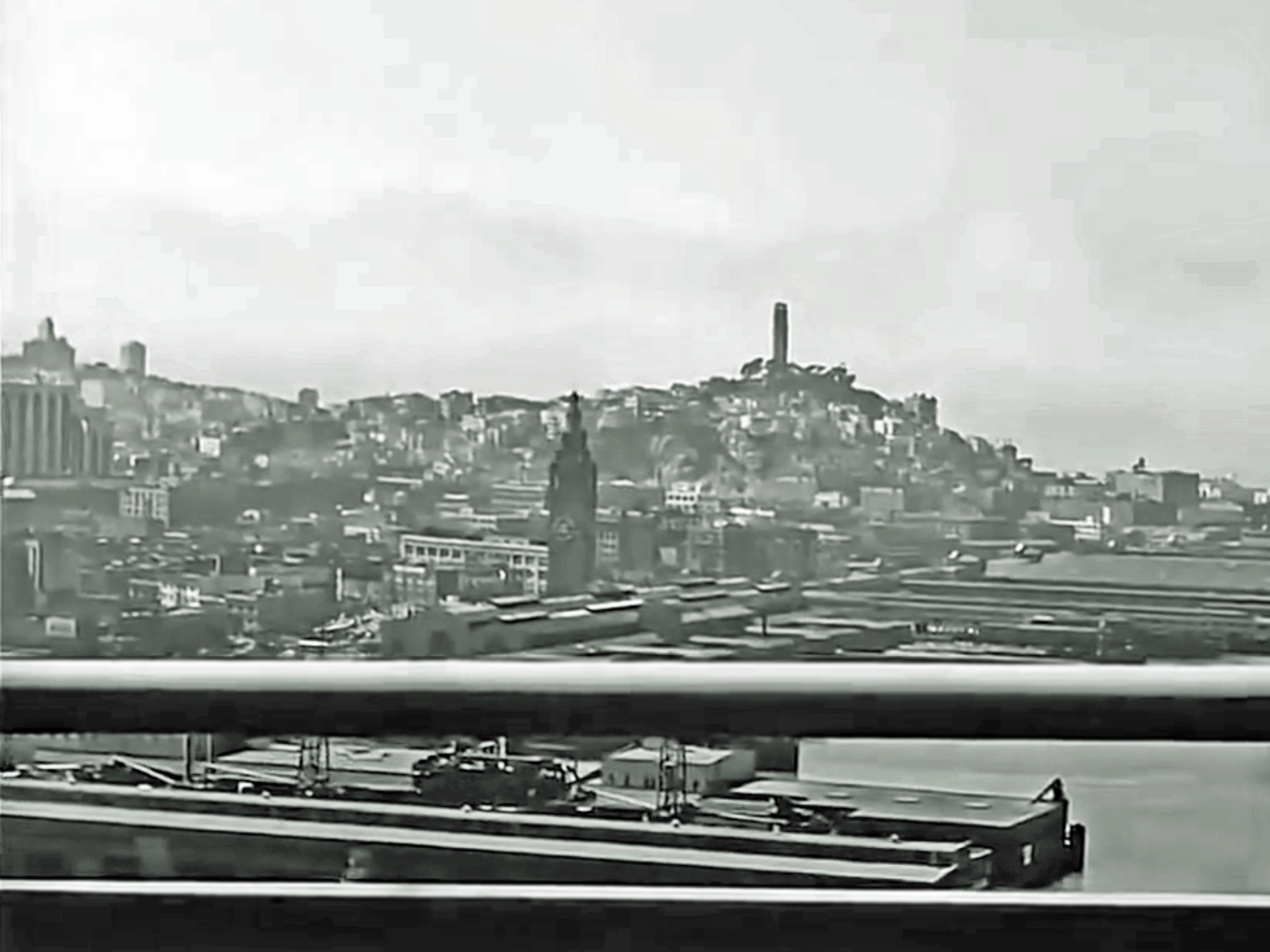
Then … in the distance looking to the north, Coit Tower is prominent at far right atop Telegraph Hill.
… and Now, here’s that view today; those high-rises were yet to be built back then.
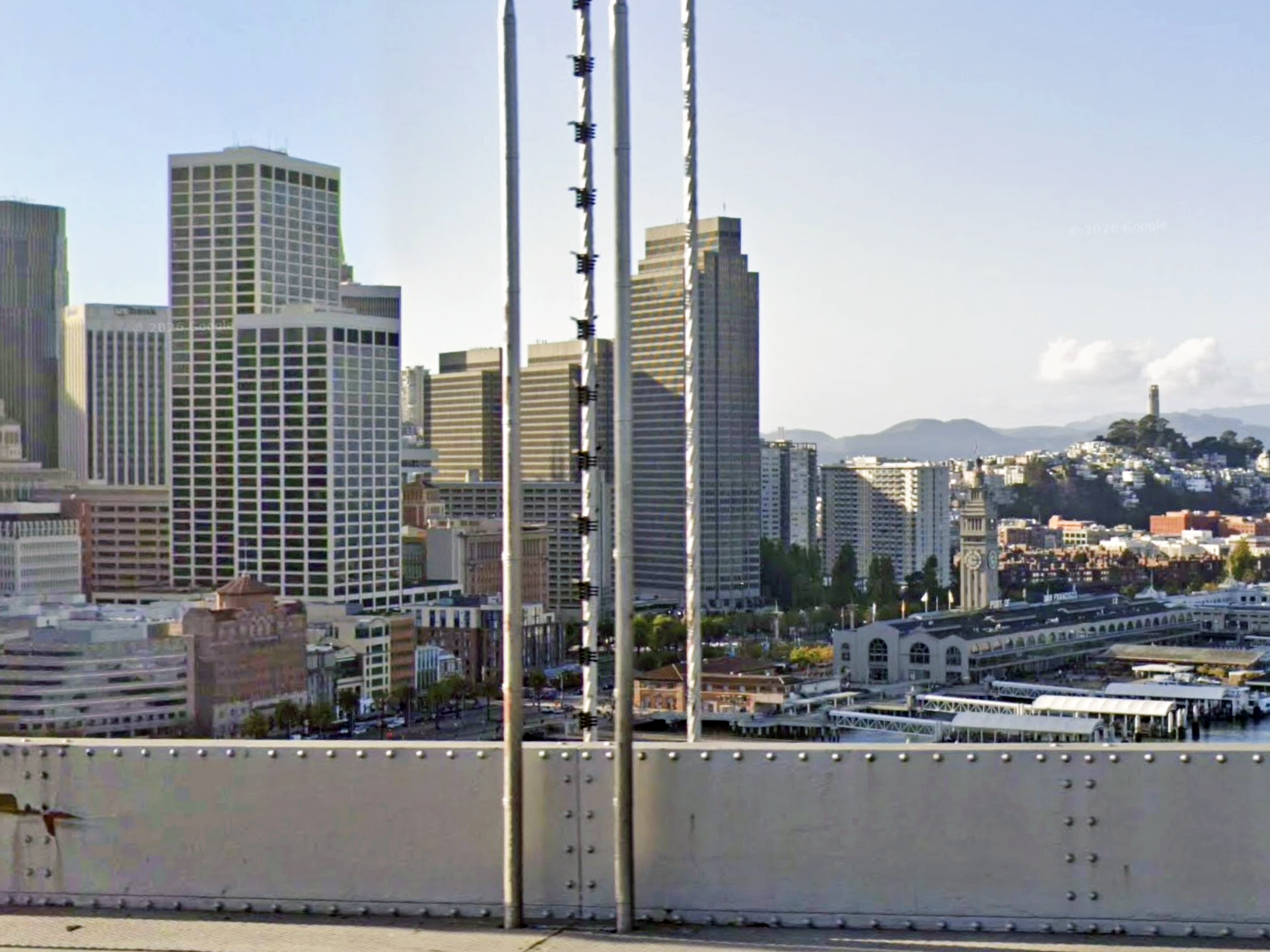
This contemporaneous capture from a 1940s video shows the view in more detail. The two buildings on the Russian Hill skyline at far left were visible between Nora and Talbot in the movie’s Then image above. The Ferry Building clock tower is in the center.
They arrive at the cabin in a scene almost certainly filmed at the studio’s back lot.
The shot can’t be duplicated so let’s talk about Talbot’s car instead. It’s a 1939 Plymouth Deluxe Convertible Coupe, pictured here in a photo from a classic car sale where it sold for $31,900. The seller claimed it belonged to MGM studios; if so it’s possible this particular car was borrowed by Warner Brothers for Talbot’s use in the movie. It’s fun to speculate from time to time.
In the cabin Nora begins to have qualms, tearfully questioning the wisdom of carrying on with a married man. But she yields to his passionate embrace and kiss.
Then … Talbot for his part has no qualms whatsoever; he’s head-over-heels with the lady. We next see him buying flowers for her in Union Square. The name on the window - Joseph’s Florist - and 1940s city directories revealed its address: 322 Post Street. Facing us across Union Square is the 200 block of Geary Street.
A 1940s vintage photo showed that same block as it appeared in the movie (outlined within the yellow box). Note the same rooftop billboard (blank at that time) and the white vertical Santa Fe Railway ticket office blade sign beyond the Dewey monument, both partially visible above. The iconic City of Paris Store is at far left.
… and Now, the same block today. Macy’s buildings have taken over half of the block and Nieman Marcus has replaced the City of Paris.
Another 1940s vintage photo captured Joseph’s Florist at 322 Post.
… and Now, this whole block has since been replaced except the Bullock and Jones building with its distinctive 3rd story triple arched windows; its most recent tenant, Williams-Sonoma, was there for over 20 years before closing down in early 2026. The yellow circle reveals where Joseph’s Florist used to be, overlapping the left end of today’s Apple Store.
Then … They head to Baker Street near Beach to admire the Palace of Fine Arts in the Marina district at the eastern edge of the Presidio.
… and Now, the Palace is the lone surviving structure at this site from the 1915 Panama-Pacific International Exposition. It continues to be a hugely popular visitor attraction.
Then … And why not pay a visit to Chinatown? Talbot may be enjoying himself now but he’s chosen a slippery slope and there’ll be no climbing back to normality for him from here. Like all of the restaurants back then Canton Low down the block at 708 Grant and the Far East Cafe further down across the street at 631 Grant down advertise chop suey, the dish of choice back then for visitors.
… and Now, they were on Grant Avenue; Commercial Street tees off to the left and Sacramento Street crosses behind them. Canton Low is gone, the Far East Cafe is still there but you won’t find chop suey on their menus thanks to pioneering restauranteur Johnny Kan who opened Kan’s restaurant in 1953 at the Canton Low site. Herb Caen at the time wrote … “A word of warning. Don’t ask for chop suey. The highest compliment to Kan’s conception of Chinese food is the absence of this most ersatz of Oriental dishes from his menu” . Foodie historians may want to read Johnny Kan’s interesting life story here.